Word Card: Word Connect
Superaid GamesWord
4.965.00 Reviews
- Version
- 2.0.1
- Installs
- 10.00K
- Age Rating
- Everyone
Screenshots
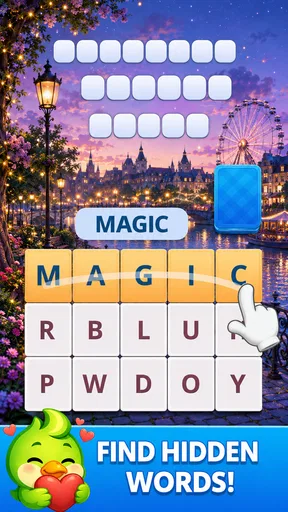
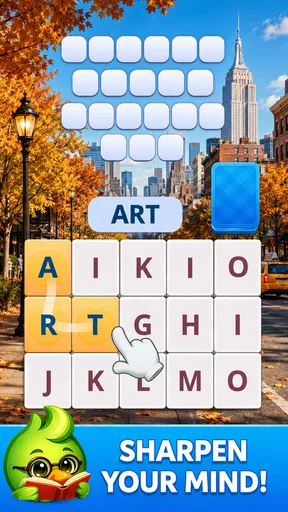
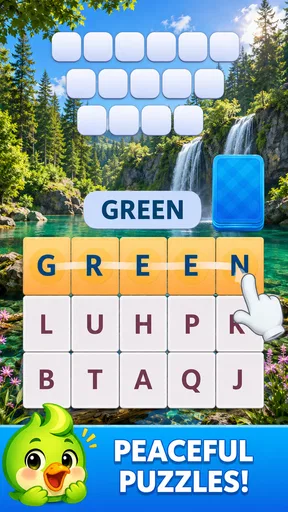
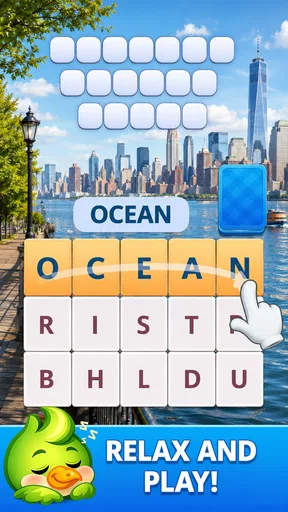
Our Review of Word Card: Word Connect
 Analysis by Appyee
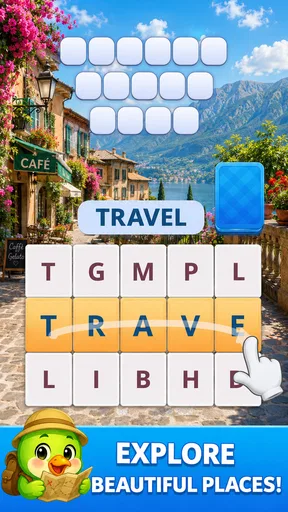
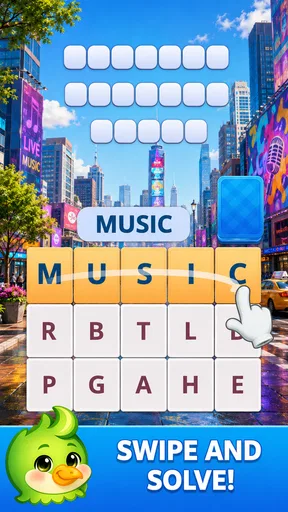
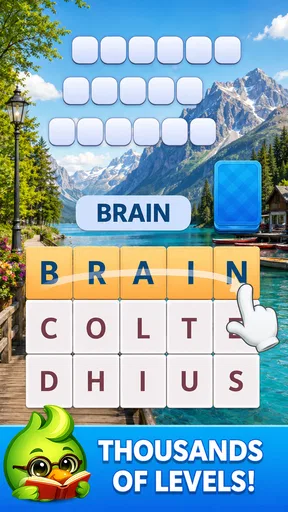
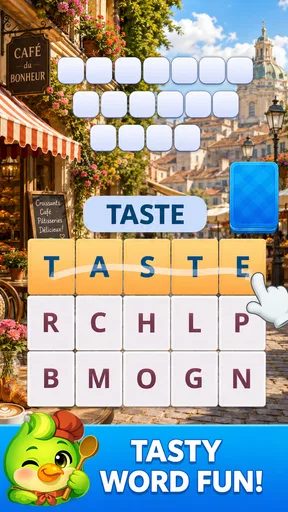
I spent time with Word Card: Word Connect as a quiet word game rather than a quick-fire challenge, and that distinction matters. Its central appeal is the way it turns word discovery into a card-based activity: you connect what you see, look for possible words, and keep your attention on the puzzle instead of juggling several complicated systems. For me, that makes it an easy game to open when I want something mentally active but not exhausting.
Superaid Games has positioned this as a free word game for everyone, and the presentation fits that broad audience. It is available for Android devices running version 7.0 or later, so it can suit people using older phones as well as newer models. The game was released on September 13, 2025, and version 2.0.1 is the version I would look for when installing it. It has built a 4.9 average from around 428 ratings, with more than 10K installs, which suggests that its simple idea has found a receptive audience.
Why connecting cards changes the usual word-puzzle rhythm
The most interesting capability here is not simply finding words. It is the combination of connecting cards and discovering words. In a conventional word puzzle, I usually focus on a grid, a row of letters, or a jumble that needs rearranging. Word Card: Word Connect gives that familiar activity a more tangible structure. The cards make each choice feel like a small move in a sequence, so I am not only asking, “What word can I make?” I am also considering which available connection is worth trying next.
That small change affects the pace. The game encourages me to scan first, test a possibility, and then reassess what remains. I do not feel pushed to solve everything in one burst. A short session can be about spotting one useful word, while a longer session can become a more deliberate search through the available combinations. This makes the game suitable for moments when I want a break that still gives my brain something to do.
I also like that the card idea gives the experience a clear identity. Many word games can feel interchangeable once the basic letter puzzles begin. Here, the card connection is the part I remember. It provides a visual reason to keep exploring, rather than making the game feel like a plain list of anagrams dressed in a new color scheme.
That does not mean the format will satisfy every word-game player. If you prefer dense crosswords, strict dictionary challenges, or puzzles where every clue carries a deep meaning, this is likely to feel lighter. Its strength is accessibility and flow, not literary complexity. I see it as a relaxing word workout, not a replacement for a serious crossword app.
A calmer kind of brain training
The store summary describes the game as a way to relax while training the brain, and in practice I found that combination believable because the activity is easy to understand. I can concentrate on spelling and pattern recognition without first learning a complicated rule set. The mental effort comes from searching and connecting, not from managing a large collection of menus or resources.
That makes it useful in everyday situations. I could imagine playing a few rounds while waiting for an appointment, taking a short break between tasks, or winding down in the evening when I want something more engaging than passive scrolling. It is also a reasonable choice for someone who enjoys word games but does not want a timer dominating every move.
The “brain training” angle should still be kept in perspective. Playing this game can exercise attention, vocabulary recall, and flexible thinking during a session, but I would not treat it as a formal learning program or a substitute for studying a language. Its value is that it makes these small mental exercises pleasant enough to repeat.
How the card connections work in practice
When I approach a puzzle, I first look across the cards instead of immediately tapping the most obvious option. That quick scan is more useful than it sounds. A word that seems easy may not be the best first move if another connection opens a more promising route. The game rewards patience in a modest way: I get better results when I treat the board as a group of related possibilities rather than as isolated letters.
My preferred method is to begin with familiar short words, then use those discoveries to refresh my view of the remaining cards. This is a practical tip for new players because it prevents the common mistake of staring at the entire puzzle as one large problem. Small successes reduce the search area and make less obvious combinations easier to notice.
A second useful habit is to switch between visual scanning and verbal thinking. I might see a likely connection from the card arrangement, then quietly pronounce possible words before committing. That simple change helps when the letters look familiar but do not immediately form a word in my head. It also makes the game feel less like random tapping.
The card format is especially helpful for players who lose focus in traditional letter grids. A grid can become visually crowded, while separated cards give the eye clearer stopping points. On the other hand, players who enjoy hunting through large letter fields may find the card layout less expansive. The same structure that makes the game approachable can also make it feel limited to someone seeking a more open-ended puzzle space.
My most useful routine for short sessions
I get the most from the game when I set a small personal goal before starting. Sometimes that means looking for words I would not normally use. Other times it means trying to solve carefully without tapping through every obvious possibility. This turns a casual round into a focused exercise without adding artificial rules.
Another tactic is to stop after a satisfying discovery instead of continuing automatically. Because the game is designed for relaxation, it works well as a brief reset. I do not need to turn every session into a long play period. In fact, the card-connection mechanic is more enjoyable for me when I leave a little curiosity for the next time rather than wearing out the pattern.
For families, the Everyone content rating makes the game easier to consider as a shared casual activity. I would still expect different players to enjoy it for different reasons. A younger player may like the immediate word hunt, while an adult may appreciate the quiet concentration. The broad age suitability is a practical advantage, especially when choosing a simple game that does not depend on mature themes.
The best everyday scenario
The strongest use case is a ten-minute pause with a phone in hand and no desire to commit to a full game. Imagine finishing lunch, waiting for a bus, or taking a break from repetitive work. I can open the game, focus on a handful of card connections, and close it when the break ends. There is no need to remember a complicated storyline or rebuild a strategy from a previous session.
That makes it different from a large puzzle game that demands a longer uninterrupted block of attention. It is also less socially demanding than a competitive word game. If I am tired, I can play at my own pace and still feel that I have done something active. The experience is best when I want a gentle challenge, not when I am looking for excitement or pressure.
I would recommend this particular scenario to people who often reach for their phone during small gaps in the day. Instead of opening an endless feed, the game gives that gap a clear beginning and end. The benefit is not that every puzzle will be memorable; it is that the activity is easy to start and mentally cleaner than many common distractions.
Where the tradeoffs become noticeable
The same simplicity that makes the game welcoming can become its main limitation. Players who want extensive strategy, competitive rankings, rich narrative, or a wide variety of puzzle formats may outgrow it. The core loop is focused on cards and word discovery, so anyone expecting a broad collection of modes should choose a more feature-heavy alternative.
The free entry point is helpful, but in-app purchases range from $1.99 to $99.99 per item. That is worth keeping in mind before treating the game as a completely cost-free experience. I would approach optional spending carefully and decide in advance whether I am happy to play within the free experience. The game is easiest to recommend when the player is comfortable enjoying the basic loop without feeling pressured to buy extras.
Another tradeoff is the balance between relaxation and repetition. The card mechanic gives the game its character, but it also defines the experience quite narrowly. If I play for too long, the repeated search-connect-discover rhythm can lose some of its freshness. My solution is to use it in short sessions rather than expecting it to replace every other word game on my phone.
It is also not the best choice for someone who wants a rigorous vocabulary tool. Discovering words can encourage recall and recognition, but the game’s purpose is entertainment first. For language learners who need pronunciation guidance, detailed definitions, or structured lessons, a dedicated language app would be more useful. For crossword enthusiasts who want clues and deeper cultural references, a crossword-focused alternative would offer more substance.
How it compares with familiar word-game alternatives
Compared with an anagram game, Word Card: Word Connect feels more visually organized because the cards give the search a physical shape. An anagram app may offer a purer test of rearranging letters, while this game adds the question of which card connection to pursue. I prefer this approach when I want a gentler entry into the puzzle, although a dedicated anagram fan may find it less demanding.
Compared with crossword apps, the game is quicker to understand and easier to play without preparation. Crosswords usually reward clue interpretation and broad knowledge; this game puts more emphasis on recognizing word possibilities from the available cards. I would pick the crossword when I want a substantial challenge and this game when I want a compact mental break.
Compared with competitive word games, it appears better suited to personal downtime. There is less reason to worry about another player’s speed or ability, and that supports the relaxing tone. The compromise is that competitive players may miss the tension of a head-to-head match. Neither approach is universally better; they serve different moods.
Who will get the most from it
I think the best audience is anyone who enjoys word puzzles but wants a low-friction format. It works particularly well for casual players, people who like short sessions, and users who find traditional grids visually tiring. The Everyone rating also makes it a sensible option for households looking for a broadly accessible word game.
It can also suit experienced puzzle players as a lighter companion to more demanding apps. I would not install it as my only word game if I wanted increasing complexity or specialist vocabulary, but I would keep it available for those moments when a full crossword feels like too much work. The card connections provide enough structure to hold my attention without turning a break into a project.
I would advise skipping it if your priority is competitive scoring, detailed explanations for every answer, or a large selection of distinct puzzle types. I would also be cautious if you dislike in-app purchase models, even though the game itself is free to start. In that case, a paid word game with a clearer one-time model may feel more comfortable.
My final take after using the central mechanic
The card-connection system is the reason to try this game. It gives ordinary word discovery a more deliberate rhythm and makes short sessions feel purposeful. I enjoyed the way a quick visual scan could lead to a small breakthrough, especially when I stopped trying to force the first word that came to mind.
Word Card: Word Connect is not trying to be a deep crossword platform or a competitive arena, and I think it is better judged on its own terms. Superaid Games has made a focused word game for relaxed attention, with a free starting point and an age rating suitable for everyone. Version 2.0.1 is the one to look for on compatible Android devices.
My recommendation is straightforward: install it if you want a calm card-based word hunt for spare moments, and use short sessions to keep the mechanic fresh. I would choose another app for formal vocabulary study, intense competition, or complex clue solving. For a quiet break where I can connect cards, search for words, and give my attention a useful place to land, Word Card: Word Connect does its job well.
Verdict
Strengths of Word Card: Word Connect
- Simple swipe controls make word finding easy to learn.
- Short levels work well for quick breaks or casual play.
- Increasing difficulty keeps later puzzles more engaging.
- Offline play is convenient when no internet connection is available.
- Daily challenges can add variety beyond the standard level path.
Limitations of Word Card: Word Connect
- Some puzzles may accept only specific word combinations.
- Difficulty can vary noticeably between consecutive levels.
- Repeated layouts may make extended sessions feel predictable.
- Hints can become expensive if used frequently.
- Ads may interrupt gameplay, especially between completed levels.
Similar Picks in This Category
View All
Word Search - Word Puzzle Game
Bluetile4.8

Word Search Quest - Puzzles
Blackout Lab4.8

CodyCross: Crossword Puzzles
Fanatee, Inc.4.7

Words of Wonders: Crossword
Fugo Games4.9

Wordscapes: Word puzzle game
PeopleFun4.7

Word Search Explorer
PlaySimple Games4.9
Frequently Asked Questions
What is Word Card: Word Connect, and how is the gameplay structured?
Word Card: Word Connect is a word puzzle game that combines classic letter unscrambles with a card-style presentation. You form words from the letters provided in each level, usually beginning with shorter answers before discovering additional words and completing the puzzle. The early stages are easy to understand, while later levels gradually require a broader vocabulary and more careful attention to possible letter combinations.
Is Word Card: Word Connect free to download and play?
The game can generally be downloaded and played without an upfront purchase, but it may include advertising and optional in-app purchases. Ads can appear between levels or after certain actions, while purchases may offer extra hints, remove advertisements, or provide other helpful resources. Before downloading, users should check the current store listing for the exact pricing, subscription details, and payment options available on their device.
Can Word Card: Word Connect be played offline?
Many of the core word puzzles may remain playable without a continuous internet connection, which makes the game suitable for short sessions while traveling or when mobile data is unavailable. However, advertisements, rewards, cloud synchronization, updates, and some online features may require connectivity. Offline behavior can vary between versions, so it is best to test the game after installation rather than assuming every feature will work without internet access.
Does Word Card: Word Connect include hints or assistance when a puzzle becomes difficult?
Yes, the game is designed to provide assistance when players get stuck, commonly through hint systems or other in-game resources. These tools can reveal letters or help point toward a solution, but they are usually limited and may need to be earned through gameplay, watching an advertisement, or making an optional purchase. Using hints selectively is recommended because later levels can become noticeably more challenging.
Is Word Card: Word Connect suitable for children and all English skill levels?
The simple controls and straightforward word-building format make Word Card: Word Connect accessible to many casual players, including users who enjoy vocabulary practice. Nevertheless, the difficulty depends heavily on English vocabulary, spelling knowledge, and the word list used by the game. Parents should also review the advertising and in-app purchase settings, while non-native speakers may find advanced stages more demanding than the opening levels.
Play our best games!


